Alan Du: Investing in the Future of Payments and the Next Generation of Builders By Bretton Lam and Isabella Liang
By Bretton Lam and Isabella Liang
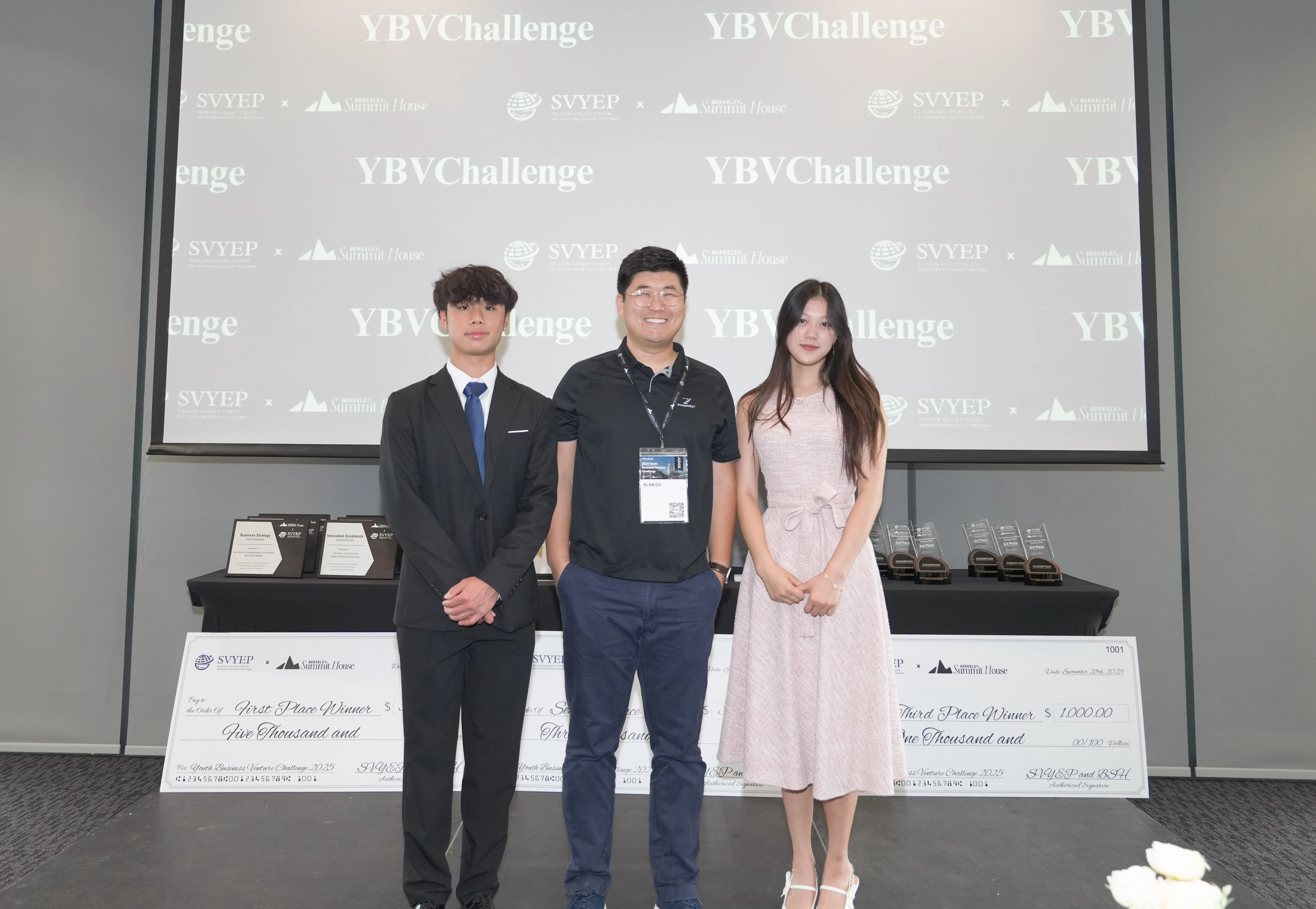
When people think about venture capital, they usually picture founders pitching ideas about the future. For Alan Du, a Partner at PayPal Ventures, the work starts somewhere more grounded. He spends his time inside the plumbing of the financial system: payments, cybersecurity, fraud, identity and the infrastructure that lets people move money safely across the world.
PayPal Ventures invests on behalf of PayPal in companies that touch its core mission of helping people transact online. That includes core payments, commerce enablement, identity, cybersecurity, fraud prevention and more. As Alan explained, the portfolio now includes dozens of companies across North America, Europe, the Middle East and Asia, and together they process activity that is larger than the GDP of many countries. He helps lead their strategy in artificial intelligence and cybersecurity, and spends most of his time with founders who are often only a few years older than the students he is speaking to.
His path into investing started far from that scale. Alan studied at UC Berkeley, then went into investment banking, working in technology, media and telecom. He describes that period as a kind of boot camp where you are tested under pressure, learn to work with very little sleep and see how big deals are done. Later, he moved into venture capital, working with Steve Case at Revolution and eventually joining PayPal Ventures, where he now focuses on areas like AI, cyber and what he jokingly calls “boring but important stuff.”
The core of his job is pattern recognition, but not in a purely technical sense. Alan evaluates founders and companies on both what they are building and who they are. On the product side, he looks for teams going after markets that are big enough to matter, solving real problems with differentiation and some kind of moat so they are not easily replaced by a competitor with more money. He spends a lot of time thinking about where the world is actually heading, not just what is working at the moment.
He gave an example from the current wave of “agentic payments” in AI. Right now, many AI tools use virtual cards layered on top of a user’s real card to let agents spend on their behalf. It works in the short term, but he does not believe it is a long term solution. In his view, payments are really an identity problem. The point is not just whether a card number is valid, but whether the person behind it can be verified. That is why he pays attention to ideas like network tokenization and stablecoins, especially for tiny online transactions where traditional card rails break down.
Alan thinks deeply about micropayments, such as paying a fraction of a cent for a single piece of content or a small slice of a service. Traditional systems were never built for that, which is why new infrastructure and models matter. To him, the question is not just what works today, but what will still make sense three to five years from now.
On the founder side, Alan looks at personality and behavior as much as slides. He talks about “pattern recognition” in people. After meeting thousands of teams, you start to see which types of founders tend to do better. It is rarely just technical talent. It is how they think about the problem, their curiosity, their hunger, how they respond when things go wrong and whether they can build and lead teams. He also looks at their view of the world and whether they see something others are missing.
Behind every deal, there is a process that is far more detailed than pitch decks suggest. Alan and his team will map an entire category, meet nearly every company in it, talk to founders, customers, partners, employees and other investors. He jokes that he talks to “everyone, even the neighbor’s dog,” because every perspective adds context. After that, there is the hard part: choosing only a tiny number of companies to back.
From there, he writes a full investment memo. It can be ten to twenty pages of analysis, math, references, risks and scenarios. He has to defend the thesis to his team, who try to poke as many holes in it as they can. The goal is not to be negative but to protect the capital they are responsible for. As he explained, the money they invest ultimately comes from pension funds, endowments and foundations. That means teachers, firefighters and people depending on those returns. The job of a VC is to be a steward of that money, not to chase whatever sounds exciting in the moment.
He is also realistic about losses. In venture, most investments do not work out. He expects to lose money more often than he makes it on a deal level. One big winner can return all the losses and more, but those winners are rare. The best he can do is make informed, risk adjusted bets. When things go wrong, he has to reevaluate the original assumptions. Does the thesis still hold up. Is there a path forward or is it time to cut losses and stop throwing good money after bad. Sometimes, he helps founders pivot and come back stronger. Other times, the right answer is to accept the loss and move on.

When he talks to students, though, Alan is not trying to make himself sound perfect. He openly says there are things he wishes he had done differently. One of the biggest is that he wishes he had reached out to more people earlier in his life.
He said he wishes he had been “much more aggressive in terms of reaching out to people” and going outside his comfort zone. He believes that talking to people from different backgrounds, industries and walks of life expands your horizon and your opportunity set in ways that textbooks never can. There is a lot of knowledge that is not written down, especially in trades and sectors like HVAC or logistics. The only way to learn it is to spend time with practitioners and ask questions.
His advice is to grow a thick skin and not be afraid to look inexperienced. In his own work, he finds it more powerful to say “I don’t know” and ask someone to explain than to pretend he understands. He told the students that the older he gets, the more comfortable he is admitting what he does not know. That humility, combined with curiosity and persistence, goes a long way.
Alan also strongly believes in the power of connections, and he does not downplay it. To him, business is always about people. Even if you sell software, you are selling it to human beings inside a company. He says that interpersonal skills and the ability to build relationships are often what separate a good founder from a great one, especially in a world where AI and modern tools make it easier for anyone to build software. If products are becoming easier to copy, then people skills matter even more.
He explains that VCs “are in the business of selling money,” so founders often have a choice of which money to take. That is why he thinks it is important for investors to bring something more than capital, like help with partnerships, hiring, go to market or navigating regulators. The same idea applies to students. If you want someone to work with you, you need to offer something real, not just ask for help.
For the students running SVYEP, Alan had very specific and encouraging feedback. He told them not to hide the fact that they are in high school. In his view, it is much more powerful to be honest about being young than to pretend to be older. Trying to copy “grown up” business language or wearing a suit that does not really fit only makes things more awkward. Instead, he encouraged them to feature their age, not cover it up. Their youth means they are coachable, energetic, curious and willing to learn. Those are strengths, not weaknesses.
He also shared what he wishes had existed when he was their age. He said he would have loved more internship style opportunities that exposed him to real companies, founders and problems. He believes hands on experience in high school can be more valuable than many classroom lessons, because it creates context for everything students are learning.
At the end of the conversation, Alan’s message to young builders and student organizers came back to the same themes: curiosity, humility, courage and connection. Reach out to people. Ask questions. Be willing to say you do not know. Do not be afraid to look young or inexperienced. Invest in real relationships rather than surface level networking. And do not wait for someone to give you permission to be interested in something bigger.
For students who want to build the future of finance, technology or anything else, his story is a reminder that the people shaping those fields are not just brilliant on paper. They are also the ones who keep learning, keep listening and keep showing up, even when they feel out of their depth.